.
Showing posts with label Africa. Show all posts

Tuesday, May 14, 2019

Postage Stamps-Burkina Faso

I was just looking back into my previous posts and a page from stamps album from Upper Volta caught my eye for when I started collecting stamps, there were many countries that don’t exist now in their original names. Some have merged into other countries, some disintegrated and some assumed new names keeping in view the aspiration of their people. One such country was Upper Volta.
First stamps of Upper Volta - 1959-60 [Source]
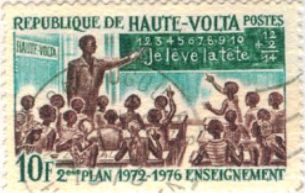
Three stamps of Upper Volta from my stamps collection
Upper Volta continued to be under French influence till 1960. In 1958 the Republic of Upper Volta emerged and issued its first stamp in 1959 when it celebrated its first anniversary. However, the republic became an independent state on 5th August 1960. 

And then days changed !!


The country had history of turmoil and military coups. On August 4, 1984, some 24 years after its independence, the republic changed its name to Burkina Faso (meaning “the country of honourable people”).

Herein under are some stamps of the new country: The Burkina Faso:
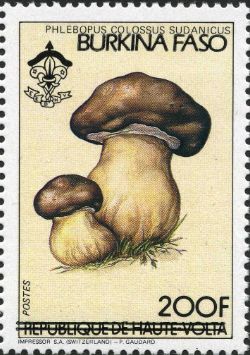
The initial days stamps with Burkina Faso overprint and The Republique Haute Volte struck out
  
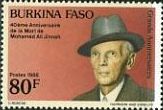
 The pioneers of freedom: Muhammad Ali Jinnah (Pakistan) - Martin Luther King (USA)


I will post stamps from similar countries that have undergone name change after independence in my coming posts.

Reference: A page from my stamp album – Upper Volta (Haute Volte)
If you like My Philatelic World, please join us at Facebook

Thursday, August 26, 2010

A page from my stamp album – Upper Volta (Haute Volte)

When I started collecting stamps, there were many countries that don’t exist now in the names then. Some have merged into other countries, some disintegrated and some assumed new names keeping in view the aspiration of their people. One such country was Upper Volta.


The history of postage stamps of Upper Volta dates back to 1890s, when the French colonized some of the African countries. Prior to the creation od the French Upper Volta in 1919, the postal service in the area was administered by Senegambia and Niger and the then Upper Senegal and Niger. The first stamps of the Upper Volta were those of the Upper Senegal and Niger with the overprint “Haute Volte” in 1920s. The dedicated stamp of Upper Volta surfaced in 1928.


Upper Volta continued to be under French influence till 1960. In 1958 the Republic of Upper Volta emerged and issued its first stamp in 1959 when it celebrated its first anniversary. However, the republic became an independent state on 5th August 1960. The country had history of turmoil and military coups. On August4, 1984, some 24 years after its independence, the republic changed its name to Burkina Faso (meaning “the country of honourable people”).

I have three stamps of Upper Volta as shown above. May be someday I also get a stamp of Burkina Faso.

Wednesday, August 25, 2010

Postage Stamps of Nigeria from My Album

Present day Nigeria was once divided into two portions – the Southern and the Northern Nigeria. The Southern portion became a British protectorate in 1900. Lagos was added to this protectorate in 1906 while the Southern Nigeria was also merged in the existing protectorate to form a single colony of Nigeria under the British patronage.


A set of nine stamps was issued in 1901 of the Nigerian protectorate, which initially bore the portraits of Queen Victoria followed by that of her son King Edward VII in 1903. In 1912, vignette was replaced with a portrait of George V.

The stamps (left column) from my album are of much later stage issued in the 1950s, bearing portrait of Queen Elizabeth II. The stamps in the other columns are of the era of independent Nigeria when it became an independent federation in 1960.

Tuesday, August 24, 2010

A page from my stamp album - Gold Coast (Ghana)

There are many countries in the world which were once called something else as these were rather colonized by different maritime powers of periods before the 20th century or changed their names to suit the aspirations of their people.

The African continent has been invaded and colonized by the Dutch, French, Portuguese and the British. Of the many such colonies, Gold Coast was one. Gold Coast refers to the region of the West Africa, est of Ivory Coast and west of Slav Coast (an area that now constitutes Togo, Benin and Western Nigeria).


Gold Coast had changed hands with many colonists since 1482 when the Portuguese colonized it and called it Portuguese Gold Coast. About two hundred years later in 1642 it became the Dutch Gold coast. Till 1871, it had also been temporarily under the domination of Prussia and Denmark and was called so. In 1871 came the British and took control of the area as the British Gold Coast.

The first stamp of the Gold Coast were issued on 1 July 1875 in times of the rein of Queen Victoria. Gold Coast then became member of the Universal Postal Union in January 1879. In 1957, the British Gold Coast became the first colony to gain independence and became present day Ghana. The first stamp of Ghana was printed in March 1957.


The two stamps in the top left column are of the period of the British Gold Coast, issued in 1948. The remaining stamps were issued by the independent Ghana after 1957 and are part of my stamp album.

A page from my stamp album - Dahomey (The Republic of)

Dahomey was a French colony on the west coast of Africa. The first stamp for Dahomey was issued in 1899. During the WW-II in 1944, Dahomey was incorporated into the French West Africa. The colony finally claimed its independence and became the Republic of Dahomey in 1960.


That’s how I knew it when I started collecting stamps in the late 60s, and I have just two stamps of this country. Both stamps were issued in 1970.

In 1975, the country changed its name and came to known as People’s Republic of Benin.

Sunday, August 15, 2010

Rhodesia – Zambia and Zimbabwe

The present day Zimbabwe and Zambia have once been associated with the British and were called Rhodesia and referred to as Northern and Southern Rhodesia. 


That was before 1964. In 1964, the Northern Rhodesia proclaimed independence and renamed itself as Zambia. Since Northern Rhodesia became extinct, the Southern Rhodesia renamed itself simply Rhodesia. However, the British never accepted this change and continued to be called Rhodesia as the southern Rhodesia.

The status quo continued till 1979, when Rhodesia again fell back to the colonial rule in 1980 and was continued to be called Southern Rhodesia by the British, as for the British, they had never recognized the independent status of Rhodesia. However, the Rhodesian always wanted an independent status and in April 1980 became an independent state of Republic of Zimbabwe.

Related Reading: Rhodesia (Wikipedia)

Saturday, August 14, 2010

Kenya, Tanganyika and Uganda

Kenya, Tanganyika and Uganda were once British colonies. The stamps in those days generally bore the portrait of King George with Lake Naivasha in the background. The stamps in left column above were printed in late 1930s.

The stamps bearing the portrait of Queen Elizabeth II are of the period after her coronation, especially 1959. These stamps continued till the three courtiers became independent. Tanganyika on independence split in to today's Rwanda, Burundi, and Tanzania. All three countries became independent states in the early 60s.


Lake Naivasha (Wikipedia)
Tanganyika (Wikipedia)

Twitter Delicious Facebook Digg Stumbleupon Favorites More